
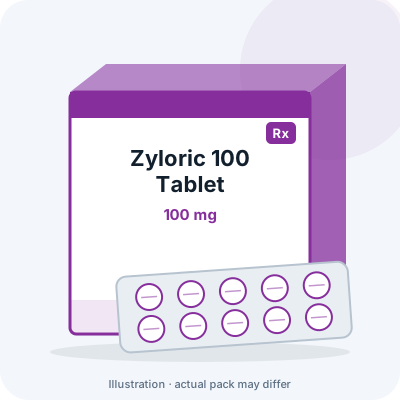
About Zyloric 100 Tablet
Zyloric 100 Tablet contains Allopurinol 100 mg. Allopurinol lowers the level of uric acid in the blood. It is used for long-term prevention of gout attacks and of some kidney stones. It does not treat a gout attack that has already started. It is usually taken once a day after food, with plenty of water.
Uses of Zyloric 100 Tablet
- Long-term prevention of gout attacks
- Prevention of uric acid and some calcium kidney stones
- Prevention of high uric acid during some cancer treatments
Benefits
In gout
Taken every day, it lowers uric acid so crystals do not form in the joints. Over time this reduces the number of gout attacks and can help prevent joint damage.
In kidney stones
Lowering uric acid can reduce the chance of certain types of kidney stones forming.
Side effects
A skin rash can be the first sign of a serious reaction, especially in the first few months. Stop the medicine and see your doctor if you get any rash.
Common
- Skin rash
- Nausea
- Diarrhoea
- Gout flare in the first months of treatment
Get medical help if you notice
- Any skin rash, especially with fever, blisters, peeling skin, mouth sores or sore eyes — stop and contact your doctor straight away
- Fever, swollen glands and feeling very unwell — seek medical help
- Yellow eyes or skin, dark urine (possible liver problems) — contact your doctor
- Unusual bruising, bleeding, sore throat or frequent infections — contact your doctor
- Allergic reaction: swelling of the face or lips, difficulty breathing — seek emergency care
How to use
Take it exactly as your doctor prescribed, after food. Swallow the tablet with a full glass of water. Drink plenty of fluids during the day. Keep taking it every day, even when you have no gout pain.
How it works
It blocks an enzyme called xanthine oxidase, which the body uses to make uric acid. Less uric acid is made, so levels in the blood fall.
Safety advice
Alcohol Caution
Alcohol raises uric acid levels and can trigger gout attacks. Limit alcohol, especially beer.
Pregnancy Consult your doctor
Use only if your doctor advises it. Tell your doctor if you are pregnant or planning a pregnancy.
Breastfeeding Consult your doctor
It passes into breast milk. Ask your doctor before using it while breastfeeding.
Driving Caution
It can cause drowsiness, dizziness or unsteadiness. Do not drive if you feel affected.
Kidney Caution
Your doctor will usually start with a lower dose in kidney disease, as the risk of side effects is higher.
Liver Caution
Your doctor may lower the dose and check liver tests if you have liver disease.
If you miss a dose
If you miss a dose, take it when you remember the same day. If it is nearly time for the next dose, skip the missed one. Do not take two doses together.
Quick tips
- Stop and see your doctor at the first sign of any skin rash.
- Keep taking it during a gout attack if you are already on it, unless your doctor says otherwise.
- Drink plenty of water every day.
- Your doctor may give another medicine to prevent gout flares in the first months.
Substitutes
Same salts in the same strength from other makers. Only switch brands on your doctor's or pharmacist's advice; our pharmacist checks every order against the prescription.
Fact box
- Chemical class
- Purine analogue
- Therapeutic class
- Musculoskeletal / anti-gout
- Action class
- Xanthine oxidase inhibitor
- Habit forming
- No
- Prescription
- Required
Interactions with other medicines
Tell your doctor and pharmacist about every medicine, vitamin and herbal product you take.
| Medicine | What can happen |
|---|---|
| Azathioprine and mercaptopurine | Their levels rise a lot, which can cause serious blood problems; doses must be greatly reduced |
| Amoxicillin and ampicillin | Higher chance of skin rash |
| Blood thinners such as warfarin | May increase the risk of bleeding |
| Water tablets and ACE inhibitors (especially in kidney disease) | Higher risk of allergic reactions |
| Theophylline and ciclosporin | Their levels may rise |
This page is general information to help you understand your medicine. It is not a substitute for advice from your doctor or pharmacist. Do not start, stop or change a medicine on your own.
Written by the Asthra Health Care team from the approved prescribing information (Allopurinol prescribing information (CDSCO-approved labelling); EMC SmPC: allopurinol; NICE BNF: allopurinol). Pharmacist review pending.