About Adaferin Gel
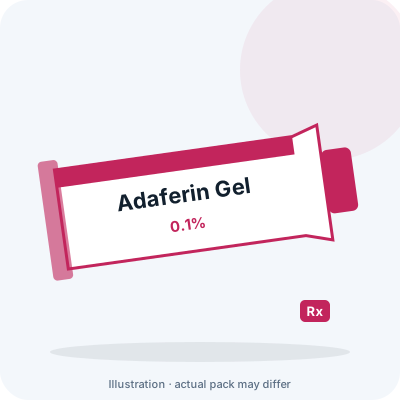
Adaferin Gel contains Adapalene 0.1%. Adapalene is a retinoid-like gel applied to the skin to treat acne. It helps unblock pores and reduce blackheads, whiteheads and red, swollen spots. It is usually applied once a day at bedtime. Results build up slowly — it may take several weeks to see a clear improvement, and acne may seem to get a little worse at first.
Uses of Adaferin Gel
- Acne vulgaris (blackheads, whiteheads, pimples) on the face, chest or back
Benefits
In acne
It helps clear blocked pores and reduces swelling, so fewer new spots form. Using it regularly, as your doctor advises, gives the best results.
Side effects
Mild dryness and irritation are common in the first few weeks and usually get better. A gentle moisturiser can help. Talk to your doctor if irritation is strong.
Common
- Dryness
- Redness
- Peeling or scaling
- Burning or stinging
- Sunburn more easily
Get medical help if you notice
- Severe redness, swelling, blistering or crusting of the skin — stop using it and contact your doctor
- Swelling of the eyes, face or lips, or difficulty breathing — stop and seek emergency care
How to use
Use it exactly as your doctor prescribed, usually once a day at bedtime. Wash the skin gently, pat it dry, then apply a thin layer to the whole affected area, not just single spots. Avoid the eyes, lips, inside of the nose and any cut, scraped or sunburnt skin. Wash your hands afterwards.
How it works
Adapalene acts on retinoic acid receptors in the skin. It helps skin cells shed normally so pores do not get blocked, and it reduces inflammation.
Safety advice
Alcohol Safe
No interaction known.
Pregnancy Unsafe
It should not be used in pregnancy or if you are planning a pregnancy. Tell your doctor if you become pregnant.
Breastfeeding Caution
Very little is absorbed, but ask your doctor first. Do not apply it to the chest area while breastfeeding.
Driving Safe
It is not expected to affect your ability to drive.
Kidney Safe
Very little of the gel is absorbed into the body, so kidney disease is not expected to matter.
Liver Safe
Very little of the gel is absorbed into the body, so liver disease is not expected to matter.
If you miss a dose
If you miss an application, apply it the next evening as usual. Do not apply extra gel to make up.
Quick tips
- Use a sunscreen during the day and avoid sunbeds, as your skin may burn more easily.
- Acne may look worse in the first few weeks before it gets better — keep using it as advised.
- Avoid harsh scrubs, waxing and other drying products on treated skin.
- Use a thin layer; using more does not work faster and causes more irritation.
Substitutes
Same salts in the same strength from other makers. Only switch brands on your doctor's or pharmacist's advice; our pharmacist checks every order against the prescription.
Fact box
- Chemical class
- Naphthoic acid derivative (retinoid-like)
- Therapeutic class
- Dermatology / anti-acne
- Action class
- Topical retinoid
- Habit forming
- No
- Prescription
- Required
Interactions with other medicines
Tell your doctor and pharmacist about every medicine, vitamin and herbal product you take.
| Medicine | What can happen |
|---|---|
| Other peeling or drying skin products (benzoyl peroxide, salicylic acid, alcohol-based toners) | More dryness and irritation; use together only if your doctor advises |
| Other retinoid creams or gels | Can add to skin irritation; avoid unless prescribed together |
| Waxing and harsh cosmetic treatments | May irritate or damage treated skin |
This page is general information to help you understand your medicine. It is not a substitute for advice from your doctor or pharmacist. Do not start, stop or change a medicine on your own.
Written by the Asthra Health Care team from the approved prescribing information (Adapalene gel 0.1% prescribing information (CDSCO-approved labelling); NICE BNF: adapalene; UK SmPC: adapalene 0.1% gel). Pharmacist review pending.